

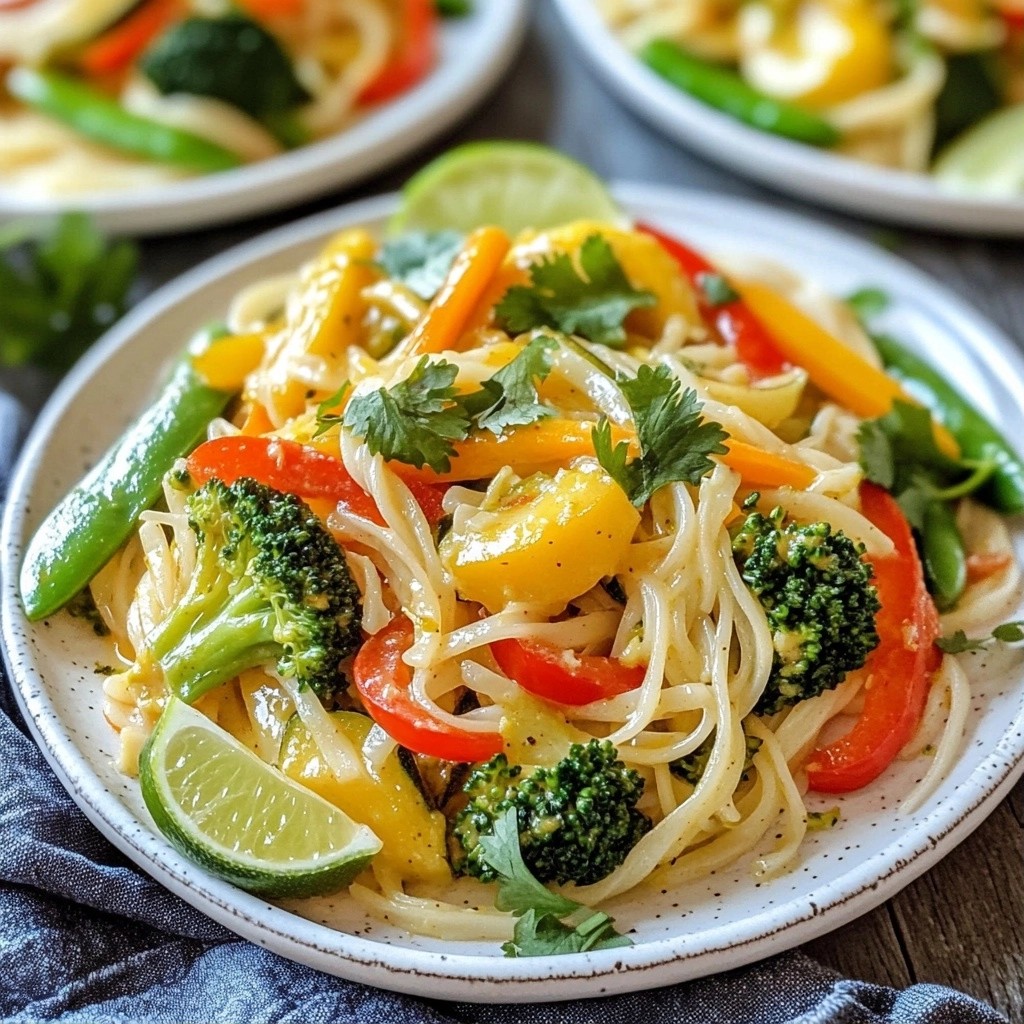
Are you ready to whip up a dish that’s both tasty and healthy? My Healthy Noodles Coconut Curry Vegetable Stir-Fry Delight is here to save your mealtime! Packed with colors and flavors, this recipe offers a simple way to enjoy a nutritious meal. Whether you're a busy parent or a health-conscious foodie, this dish will satisfy your cravings while keeping it light. Let’s dive into the fresh ingredients and easy steps that make this meal a hit!
Ingredients
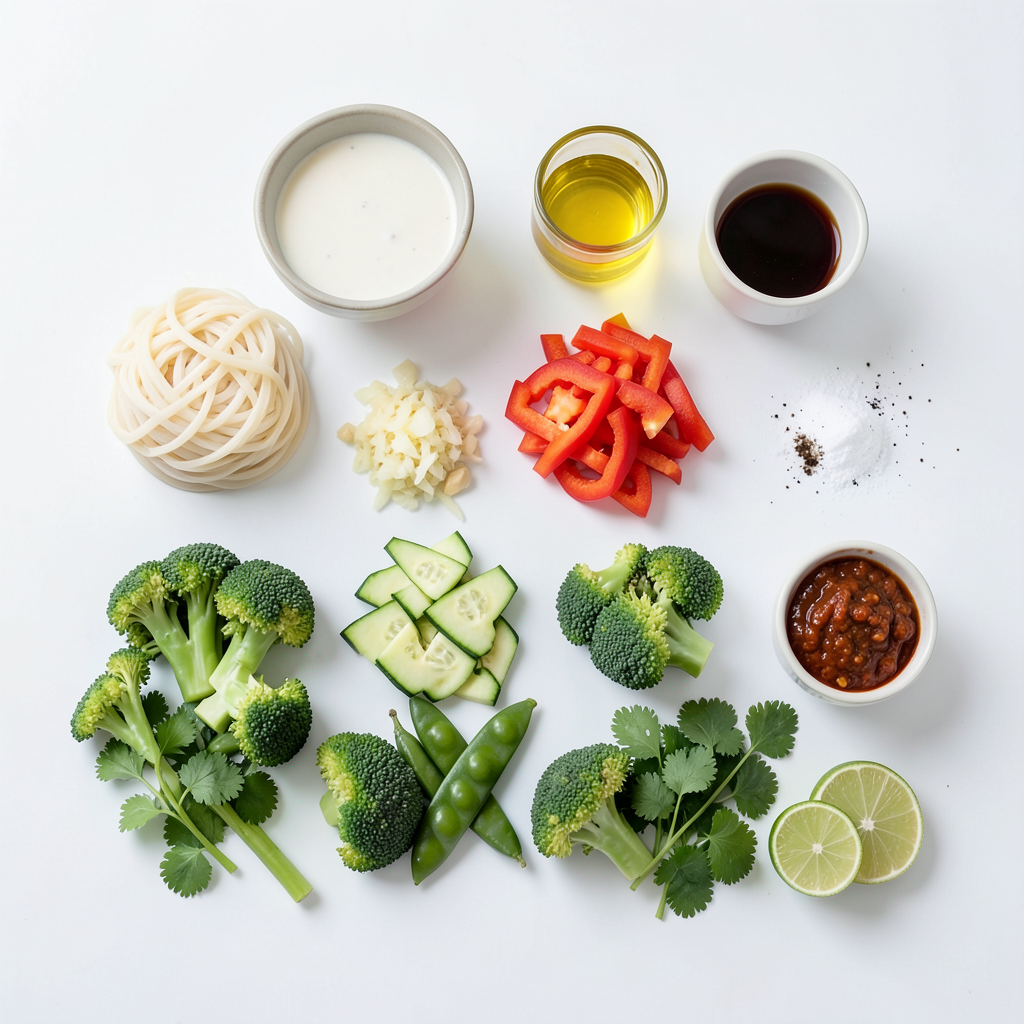
Main Ingredients for Healthy Noodles Coconut Curry Vegetable Stir-Fry
- 200g rice noodles
- 1 cup coconut milk
- 1 tablespoon coconut oil
- 1 onion, sliced
- 2 cloves garlic, minced
- 1 tablespoon fresh ginger, grated
- 1 red bell pepper, sliced
- 1 zucchini, julienned
- 1 cup broccoli florets
- 1 cup snap peas
- 2 tablespoons red curry paste
- 1 tablespoon soy sauce (or tamari for gluten-free)
- Salt and pepper to taste
These main ingredients create a base for our dish. Rice noodles offer a soft texture. Coconut milk adds creaminess. The vegetables bring color and crunch to every bite.
Optional Add-ins for Enhanced Flavor
- Sliced mushrooms
- Baby corn
- Carrots, julienned
- Spinach or kale
Feel free to mix in any of these optional add-ins. They boost flavor and nutrition. You can add them during the vegetable phase of cooking.
Recommended Fresh Herbs and Garnishes
- Fresh cilantro
- Lime wedges
Fresh cilantro brightens the dish. Lime wedges add a zesty kick. They enhance the overall taste and presentation at the table.
Step-by-Step Instructions
Preparation of Rice Noodles
First, cook the rice noodles as the package says. Use a large pot of boiling water. Drain the noodles and set them aside. This step is key for a good stir-fry.
Sautéing Aromatics to Build Flavor
Next, get a large pan or wok. Heat coconut oil over medium heat. Add the sliced onion, minced garlic, and grated ginger. Sauté for about 2-3 minutes. You want the onion to turn soft and fragrant.
Cooking Vegetables for Perfect Crispness
Now, add your sliced red bell pepper, zucchini, broccoli, and snap peas. Stir-fry these vegetables for 5-7 minutes. You want them to be tender but still have a nice crunch. This keeps them fresh and colorful.
Preparing and Combining the Curry Sauce
Push the cooked vegetables to one side of the pan. Add the red curry paste to the empty side. Cook this for about 1 minute to wake up the flavors. Then, stir it into the vegetables.
Final Assembly and Serving Techniques
Pour in the coconut milk and soy sauce. Stir everything together well. Let it simmer for 2-3 minutes. This helps thicken the sauce. Finally, add the cooked rice noodles. Toss gently until the noodles are coated. Season with salt and pepper to taste. Serve on plates, garnished with fresh cilantro. Add lime wedges for a zesty touch.
Tips & Tricks
Cooking Noodles: Achieving the Right Texture
To cook the rice noodles, follow the package guide. Ensure you don’t overcook them. They should be soft but firm. Drain them well and rinse with cold water. This stops the cooking process and keeps them from sticking.
Balancing Flavors in Coconut Curry
Start with the red curry paste; it packs a punch. Toast it in the pan for one minute. This step enhances its flavors. Then, add the coconut milk and soy sauce. Taste and adjust with salt and pepper. A squeeze of lime brightens the dish.
Ensuring Perfectly Cooked Vegetables
For the best veggies, cook them just until tender. Stir-fry over medium heat to keep them crisp. Add them in stages, starting with the onion and garlic. Then, mix in the bell pepper and zucchini. Finally, add broccoli and snap peas. This way, each vegetable shines in the dish.
Variations
Gluten-Free Alternatives
If you need a gluten-free meal, choose gluten-free noodles. Look for rice noodles or buckwheat noodles. Tamari is a great swap for soy sauce. Always check labels to ensure no hidden gluten sneaks in.
Adding Proteins for a Heartier Meal
You can easily boost this dish with proteins. Try adding cooked chicken, shrimp, or tofu. For tofu, use firm or extra-firm for the best texture. Just sauté the protein with the aromatics. This adds flavor and makes the dish more filling.
Vegan Adaptations for Different Diets
For a vegan twist, ensure you use plant-based proteins. Tofu, tempeh, or chickpeas work well here. Double-check your curry paste for animal products. Most red curry pastes are vegan, but some may contain shrimp paste. Always read the label for peace of mind.
Storage Info
Storing Leftovers Properly
To store your leftovers, let the stir-fry cool down first. Transfer the dish to an airtight container. This keeps the food fresh. Store it in the fridge for up to three days. If you want to keep it longer, consider freezing it.
Reheating Tips for Best Results
When reheating, use a pan on low heat. Add a splash of water or coconut milk to keep it moist. Stir gently until it heats through. Avoid using a microwave, as it can make the noodles soggy.
Freezing for Future Meals
To freeze, place the cooled stir-fry in a freezer-safe container. Make sure to leave some space for expansion. It can last up to three months in the freezer. When ready to eat, thaw it in the fridge overnight. Reheat it in a pan for the best taste.
FAQs
Can I use other types of noodles instead of rice noodles?
Yes, you can use other noodles! Try whole wheat, soba, or egg noodles. Each type brings a unique texture and flavor. Whole wheat adds more fiber, while soba offers a nutty taste. Choose your favorite for a fun twist!
How can I make this dish spicier?
To add heat, use more red curry paste. You can also add sliced fresh chili peppers. For an extra kick, sprinkle some chili flakes on top. Adjust to your liking for a spicy experience!
What vegetables can I substitute or add?
Feel free to mix and match veggies! Carrots, bell peppers, or baby corn work well. You can also add leafy greens like spinach or kale. Use what you have on hand for a colorful dish!
Is this recipe suitable for meal prep?
Absolutely! This stir-fry keeps well in the fridge. Store it in airtight containers for up to four days. Reheat it gently on the stove or in the microwave for quick meals later!
This blog post covered how to make a healthy coconut curry vegetable stir-fry. We explored the key ingredients, optional add-ins, and fresh herbs for extra flavor. I shared step-by-step instructions for perfecting the dish, along with tips for cooking noodles and balancing flavors. We also looked at variations for different diets and how to store leftovers properly.
In the end, this dish is easy to adapt and great for sharing. Enjoy making your stir-fry while discovering new flavors!