

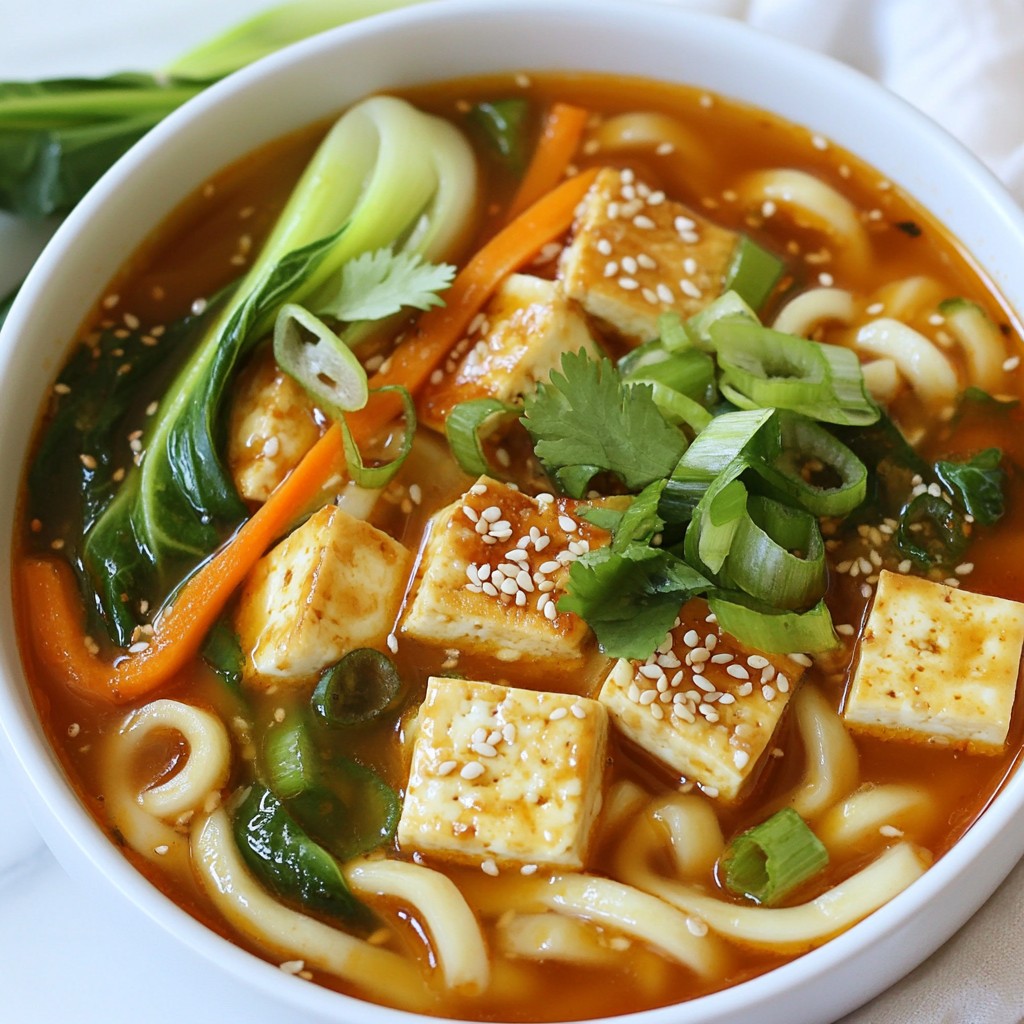
Craving a warm, hearty meal? Look no further than Miso Udon with Tofu! This delicious noodle dish combines tender udon noodles, rich miso broth, and protein-packed tofu for a satisfying experience. Whether you’re a seasoned chef or just starting in the kitchen, this guide will walk you through easy steps and tasty variations. Get ready to warm up with this delightful comfort food that you can customize to your taste!
Ingredients
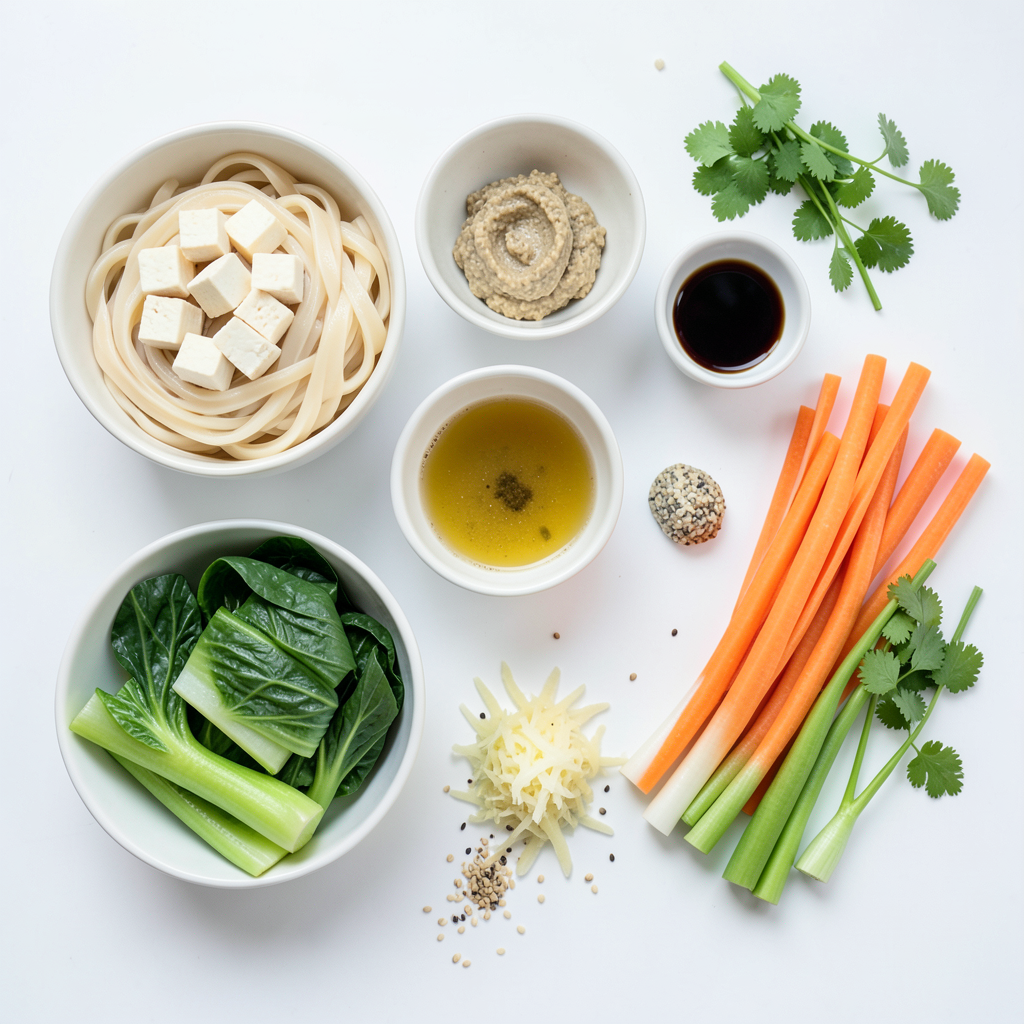
List of main ingredients
- 200g udon noodles
- 200g firm tofu, cubed
- 1 tablespoon miso paste (white or red)
- 4 cups vegetable broth
- 1 tablespoon soy sauce
- 1 tablespoon sesame oil
- 1 tablespoon grated ginger
- 2 garlic cloves, minced
- 1 cup bok choy, chopped
- 1 small carrot, julienned
- 1/2 cup green onions, sliced
- Sesame seeds for garnish
- Fresh cilantro for garnish
Miso udon with tofu packs a lot of flavor and nutrients. Udon noodles provide a nice chewy texture. Firm tofu adds protein and absorbs the rich broth well. The miso paste gives this dish depth and umami. I love using vegetable broth for a light taste that allows the other flavors to shine.
Fresh ginger and garlic give the dish a warm, spicy kick. Bok choy adds a crunchy texture, while the carrot brings in sweetness. Green onions, sesame seeds, and cilantro finish the dish beautifully. These ingredients make every bowl look inviting and delicious.
Optional ingredients and garnishes
- Variations in miso (white or red)
- Additional vegetables (e.g., mushrooms, spinach)
- Protein alternatives (e.g., tempeh or shrimp)
Feel free to switch up the miso. White miso is milder, while red miso has a bolder taste. You can add mushrooms or spinach for more nutrition and flavor. If you want a different protein, try tempeh or shrimp. These options make the dish fun and unique.
Step-by-Step Instructions
Prepping the tofu
1. Heat sesame oil in a large pot over medium heat. The oil will shimmer when ready.
2. Add cubed tofu to the pot. Sauté until golden brown on all sides, about 5-7 minutes.
3. Once browned, remove the tofu and set aside. This step adds great flavor.
Cooking the broth
1. In the same pot, pour in the vegetable broth.
2. Add 1 tablespoon of miso paste. Stir well to dissolve the miso.
3. Next, add 1 tablespoon of soy sauce. This gives the broth a rich flavor.
Noodle and vegetable preparation
1. Bring the broth to a boil. Add 200g udon noodles, cooking them for about 5-7 minutes.
2. In the last 2 minutes of cooking, stir in 1 cup of chopped bok choy and 1 small julienned carrot.
3. Finally, add the sautéed tofu back to the pot to heat through.
This simple process creates a warm bowl of comfort. Enjoy your hearty miso udon with tofu!
Tips & Tricks
Cooking tips for perfect udon
- Avoiding mushy noodles: Cook udon noodles just until tender. Follow the package time closely. If you overcook them, they will become mushy and lose their nice bite.
- Importance of fresh ingredients: Always use fresh vegetables and herbs. Fresh bok choy and green onions add crunch and flavor. They make your dish colorful, too.
Enhancing flavors
- Suggested spices and herbs: Try adding a pinch of red pepper flakes for heat. Chopped cilantro adds freshness. You can also sprinkle sesame seeds for a nutty taste.
- Adjusting saltiness to taste: Taste your broth before serving. If it’s too salty, add a splash of water. If it’s bland, add a bit more soy sauce or miso.
Serving suggestions
- Bowl presentation ideas: Use deep bowls for serving. Layer the noodles first, then pour the broth over. Add your tofu and veggies on top for a colorful look.
- Pairing with side dishes: Serve with a side of pickled vegetables or a simple salad. These add crunch and balance to the meal. You can also enjoy it with rice for a heartier feast.
Variations
Dietary adaptations
You can easily adapt this recipe to fit your needs. For a vegan and gluten-free option, use gluten-free udon noodles. Most miso pastes are plant-based, but check the label to be sure. Replace soy sauce with tamari for a gluten-free alternative.
For low-carb variations, swap the udon noodles for zucchini noodles or shirataki noodles. These options cut carbs but still give a nice texture. You get a hearty meal that feels light.
Flavor enhancements
If you like heat, try spicy miso udon. Add chili paste or red pepper flakes to the broth. This gives the dish a kick that warms you up.
For a creamy twist, mix in coconut milk with the broth. This adds a rich flavor that pairs well with the miso. It creates a comforting bowl that feels indulgent.
Seasonal variations
You can switch up the ingredients based on the season. In the fall, add squash or pumpkin for a sweet touch. These ingredients add warmth and depth to the dish.
In the summer, brighten the dish with zucchini or bell peppers. These veggies add freshness and crunch. They make the dish feel light and vibrant, perfect for warm days.
Storage Info
Storing leftovers
To keep your Miso Udon fresh, let it cool first. Place it in an airtight container. This helps keep the noodles and broth tasty. Use glass or BPA-free plastic containers. Avoid using metal containers as they can react with the miso.
Reheating instructions
When you reheat your noodles, add a splash of broth or water. This helps revive the noodle texture. Heat gently on the stove or in the microwave. Make sure it’s hot all the way through. Always check the temp for safety.
Freezing recommendations
You can freeze the broth and noodles separately. This keeps them fresh longer. When freezing, use freezer-safe bags or containers. To thaw, place in the fridge overnight. You can also run the bags under cold water. Avoid refreezing once thawed for best taste.
FAQs
What is miso and its health benefits?
Miso is a thick paste made from fermented soybeans. It is rich in protein, vitamins, and minerals. You can find miso in many colors, like white and red. Each type has a unique taste. Miso is also full of probiotics. Probiotics help your gut stay healthy. They can improve digestion and boost your immune system.
Can I replace udon noodles with another type?
Yes, you can use other noodles! Good options include soba, rice, or ramen noodles. Keep in mind that each type has a different cooking time. For instance, soba cooks faster than udon. Check the package instructions to avoid overcooking.
How to make the dish spicier?
To add heat, try chili paste or red pepper flakes. Stir them in when you add the broth. You can also use spicy sesame oil. Drizzle it over the soup before serving. This adds flavor and a nice kick!
This blog post offered a simple guide to making delicious miso udon. We discussed key ingredients like udon noodles, tofu, and miso paste. I shared step-by-step cooking instructions, tips for perfecting your dish, and various options to adapt recipes for your needs. Remember, cooking can be fun and creative! Feel free to explore different flavors and ingredients. Enjoy your homemade miso udon, and happy cooking!