

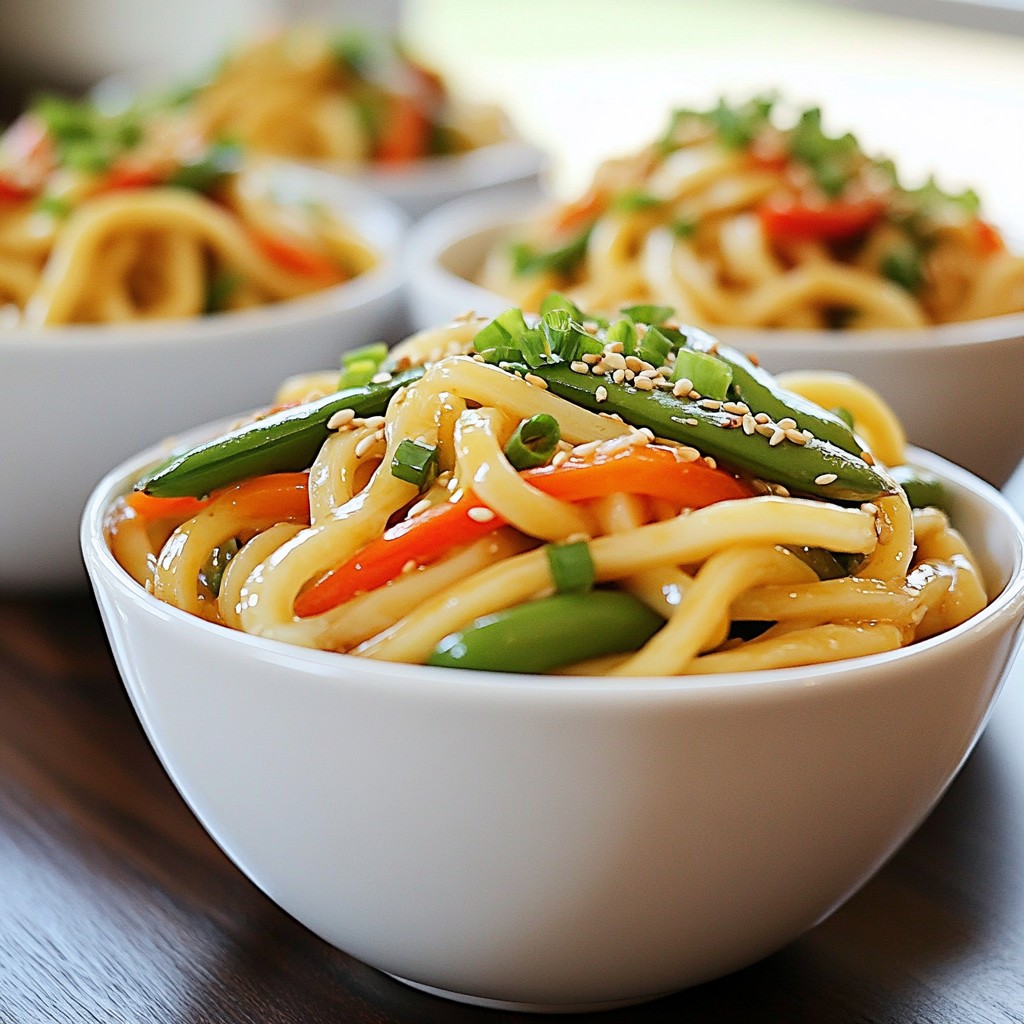
Looking for a warm and comforting meal? Dive into my recipe for Savory Soy Ginger Udon! This dish combines chewy udon noodles with fresh veggies, garlic, and flavorful soy sauce. It’s simple to make and packed with taste, perfect for busy weeknights or cozy dinners. Join me as I share the steps to create this delightful noodle dish that will tantalize your taste buds and satisfy your hunger. Let’s get cooking!
Ingredients
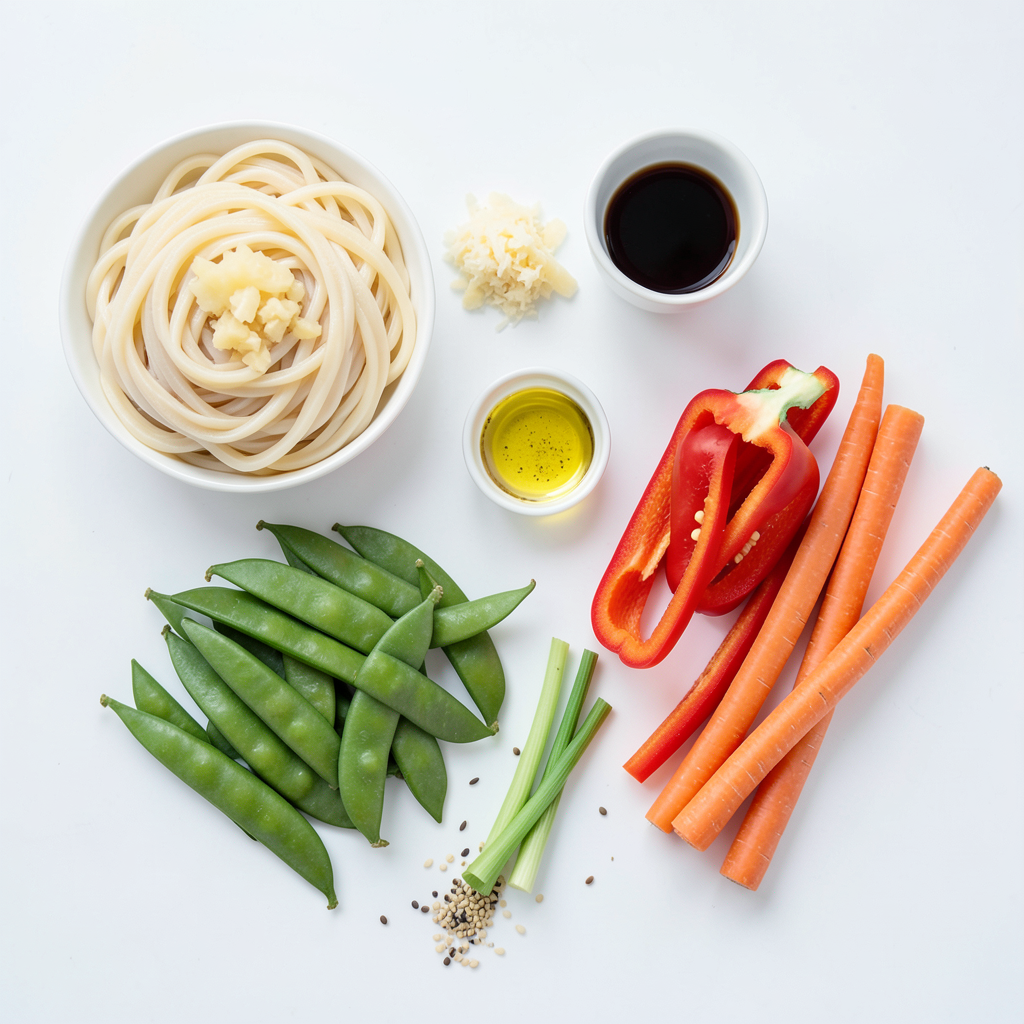
Essential Ingredients for Savory Soy Ginger Udon
- Udon Noodles: 200g of udon noodles is key. They are thick and chewy, making them perfect for this dish.
- Flavor Enhancers:
- 2 tablespoons soy sauce bring salt and umami.
- 1 tablespoon ginger, freshly grated adds a warm, spicy note.
- 2 cloves of minced garlic give depth and aroma.
- Vegetables:
- 1 cup snap peas, trimmed for crunch and sweetness.
- 1 red bell pepper, julienned for color and flavor.
- 1 carrot, julienned for natural sweetness and texture.
- Optional Garnishes:
- 2 green onions, chopped for freshness and a pop of color.
- 1 tablespoon sesame seeds adds crunch and visual appeal.
Each ingredient plays an important role in the flavor and texture of this dish. Udon noodles cling to the savory sauce, while the veggies add color and nutrients. Garnishes elevate the dish, making it not just tasty but also beautiful.
Step-by-Step Instructions
Cooking the Udon Noodles
1. Boiling Process and Timing: Start by filling a large pot with water. Bring the water to a boil over high heat. Once boiling, add the udon noodles. Cook them for about 8 to 10 minutes, or until they are tender.
2. Draining and Setting Aside: After cooking, carefully drain the noodles in a colander. Rinse them briefly under cold water. This stops the cooking and keeps them from sticking together. Set the noodles aside for later.
Preparing the Stir-Fry Base
1. Heating the Sesame Oil: Grab a large skillet or wok. Heat 1 tablespoon of sesame oil over medium heat. Make sure it gets hot but not smoking.
2. Adding Garlic and Ginger: Once the oil is hot, add 2 minced garlic cloves and 1 tablespoon of freshly grated ginger. Stir them for about 30 seconds. You want to smell the nice aroma but not burn them.
Cooking the Vegetables
1. Stir-Frying Snap Peas, Bell Peppers, and Carrots: Add 1 cup of snap peas, 1 red bell pepper (julienned), and 1 julienned carrot to the skillet. Stir-fry them for about 3 to 4 minutes. Keep stirring until they are slightly tender but still crisp.
2. Achieving the Right Tenderness: The goal is to cook the veggies so they are bright and crunchy. You should see nice colors and feel a little bite when you taste them.
Combining Noodles and Sauce
1. Tossing Noodles with Vegetables and Soy Sauce: Now, add the cooked udon noodles to the skillet. Pour in 2 tablespoons of soy sauce. Toss everything together well. Make sure the noodles and veggies are fully coated in the sauce.
2. Heating Thoroughly: Cook for an additional 2 to 3 minutes. Stir frequently until everything is hot and combined.
Final Seasoning and Serving
1. Adjusting Flavor with Salt and Pepper: Taste your dish. Add salt and pepper as needed to enhance the flavor.
2. Garnishing for Presentation: Remove from heat and serve the udon in deep bowls. Top with chopped green onions and a sprinkle of sesame seeds if you like. This adds a nice touch and looks great!
Tips & Tricks
How to Perfectly Cook Udon Noodles
- Avoiding Overcooking: Udon noodles need just the right amount of time. Boil them for 8-10 minutes. Check often to avoid mushy noodles. Drain them right away to stop cooking.
- Techniques for Chewy Texture: For a perfect bite, make sure to stir the noodles while cooking. This keeps them from sticking. Rinse them briefly in cold water after draining. This step helps maintain their chewy quality.
Achieving the Best Flavor Profile
- Balancing Soy Sauce and Seasoning: Soy sauce is key to the dish's flavor. Use about 2 tablespoons for a great taste. Adjust based on your taste. Don’t forget to taste as you go!
- Experimenting with Garlic and Ginger: Fresh garlic and ginger add a punch. Use 2 cloves of garlic and 1 tablespoon of grated ginger. These ingredients enhance your dish, making it fragrant and tasty.
Visual and Textural Presentation Tips
- Suggested Serving Styles: Serve udon noodles in deep bowls. This adds height to your dish. Layer the vegetables on top for a colorful look.
- Importance of Garnishes: Garnishes make your dish pop. Use fresh green onions and sesame seeds. They add color and crunch, making your meal visually appealing. A drizzle of sesame oil adds extra flavor.
Variations
Alternative Protein Additions
You can add different proteins to your savory soy ginger udon. Tofu is a great choice for a vegetarian option. It soaks up flavor well and adds good texture. If you prefer meat, chicken or beef works nicely. Just make sure to cook them fully before adding the noodles. For a vegan option, stick with tofu or try tempeh for a nutty flavor.
Different Vegetable Combinations
Feel free to mix in your favorite vegetables. Seasonal veggies work best, so use what you love. Broccoli, mushrooms, or bok choy can add great taste. Just remember to adjust cooking times. For instance, thicker veggies like carrots may need more time. Keep them crisp for the best bite.
Customizing the Sauce
Want a spicy kick? You can make a spicy soy ginger sauce by adding chili paste or flakes. It pairs well with the udon noodles. If you want a different flavor, use teriyaki or hoisin sauce instead. These sauces bring their unique tastes to the dish. You can experiment until you find your perfect mix!
Storage Info
Storing Leftovers
To keep your savory soy ginger udon fresh, follow these steps:
- Allow the noodles to cool to room temperature.
- Place them in an airtight container.
- Store them in the refrigerator for up to 3 days.
I recommend using glass containers. They help keep the flavors intact. Plus, they don't stain like plastic.
Reheating Instructions
To reheat your udon, use these techniques:
- Place the noodles in a skillet over low heat.
- Add a splash of water or extra soy sauce.
- Stir gently to keep the noodles tender.
You can also use a microwave. Heat in short bursts, stirring in between to keep them moist. This method helps maintain the delicious flavor and texture.
Freezing Options
If you have extra udon, freezing is a good choice.
- Pack the cooled noodles in a freezer-safe bag.
- Remove as much air as possible to prevent freezer burn.
To thaw, place the udon in the fridge overnight. For quick options, you can submerge the bag in cold water. Reheat gently in a skillet or microwave. This way, you’ll enjoy your savory soy ginger udon later without losing taste!
FAQs
What is the best type of udon noodles to use?
For the best taste and texture, I recommend fresh udon noodles. They have a soft, chewy bite. You can also find dried udon noodles in stores. These are a good option too. Just cook them according to the package instructions. Homemade udon noodles are fantastic, but they take time to make. If you have the chance, try making them!
Can I use other types of noodles?
Yes, you can use other noodles if you can’t find udon. Soba noodles are a great choice. They have a nice flavor and cook quickly. Rice noodles also work well. They add a different taste and texture. Just adjust the cooking time based on the noodle type you choose.
How can I make this dish gluten-free?
To make this dish gluten-free, swap udon for rice noodles or gluten-free noodles. Use gluten-free soy sauce instead of regular soy sauce. This keeps the flavor while making it safe for those with gluten sensitivity. Always check labels to ensure all ingredients are gluten-free.
What other sauces work well with udon noodles?
Udon noodles pair well with many sauces. Try teriyaki sauce for a sweet twist. A spicy chili sauce can add heat. You can also use miso sauce for a rich flavor. Each sauce gives a unique taste, so feel free to experiment!
How do I store fresh ginger?
To keep fresh ginger, store it in the fridge. Wrap it in a paper towel and place it in a plastic bag. This keeps it dry and fresh longer. You can also freeze ginger. Just peel and slice it before freezing. This way, you always have ginger ready to use!
Savory soy ginger udon is simple yet delicious. You learned about the key ingredients, like udon noodles, soy sauce, and fresh veggies. I shared step-by-step instructions to make cooking easy and fun. You also discovered tips to enhance flavor and ways to customize the dish. Plus, there are storage methods to keep leftovers fresh. Now you can enjoy creating this meal at home, adjusting it to your taste. Dive in and make this recipe your own!