

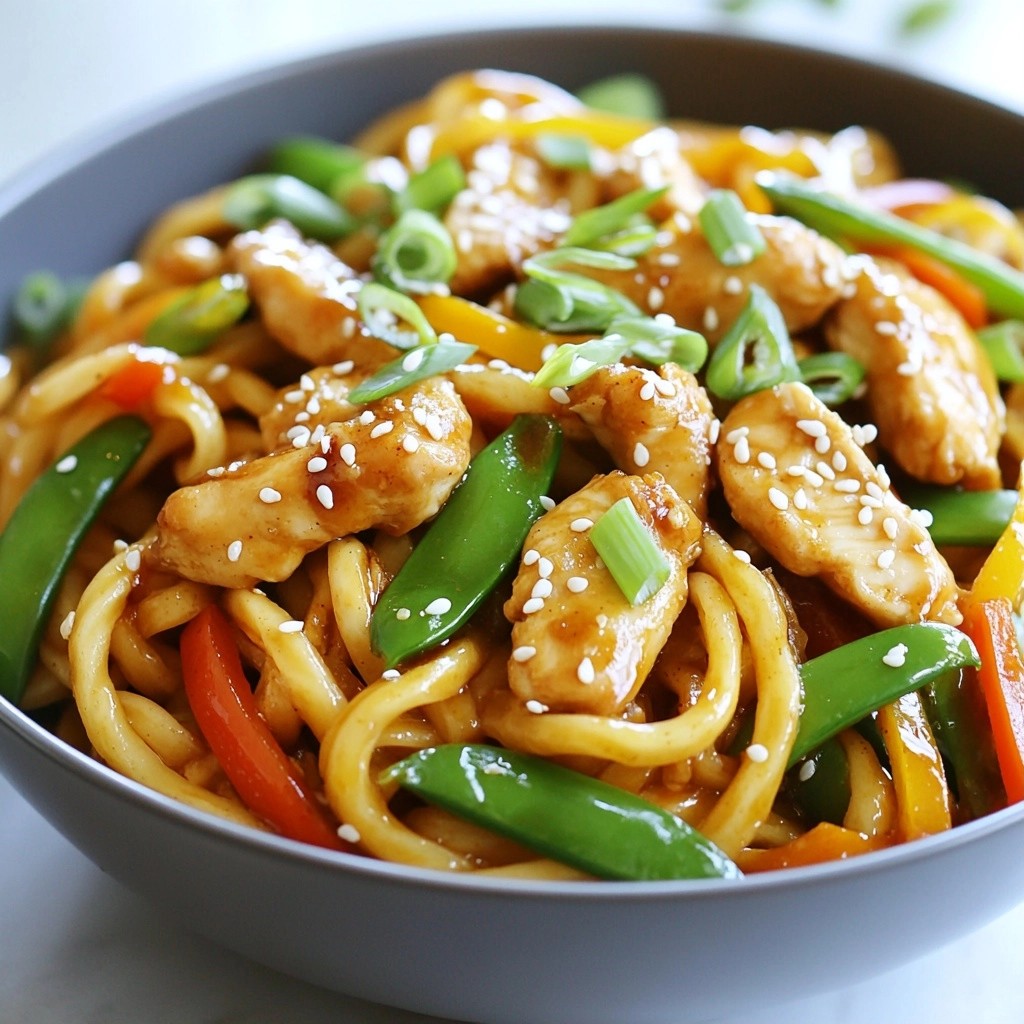
Craving a warm, filling meal that bursts with flavor? Look no further! My Sesame Ginger Chicken Udon is the perfect dish. This hearty noodle recipe combines tender chicken with fresh veggies, all in a savory sesame-ginger sauce. In this post, I'll guide you step-by-step through the ingredients and cooking process. Get ready to impress your taste buds and satisfy your hunger with this delicious dish!
Ingredients
List of Required Ingredients
- 300g udon noodles
- 2 chicken breasts, thinly sliced
- 2 tablespoons sesame oil
- 2 tablespoons soy sauce (low sodium)
- 1 tablespoon ginger, grated
- 2 garlic cloves, minced
- 1 bell pepper, julienned
- 1 cup snap peas
- 3 green onions, chopped
- 2 teaspoons sesame seeds
- Salt and pepper to taste
- Fresh cilantro for garnish (optional)
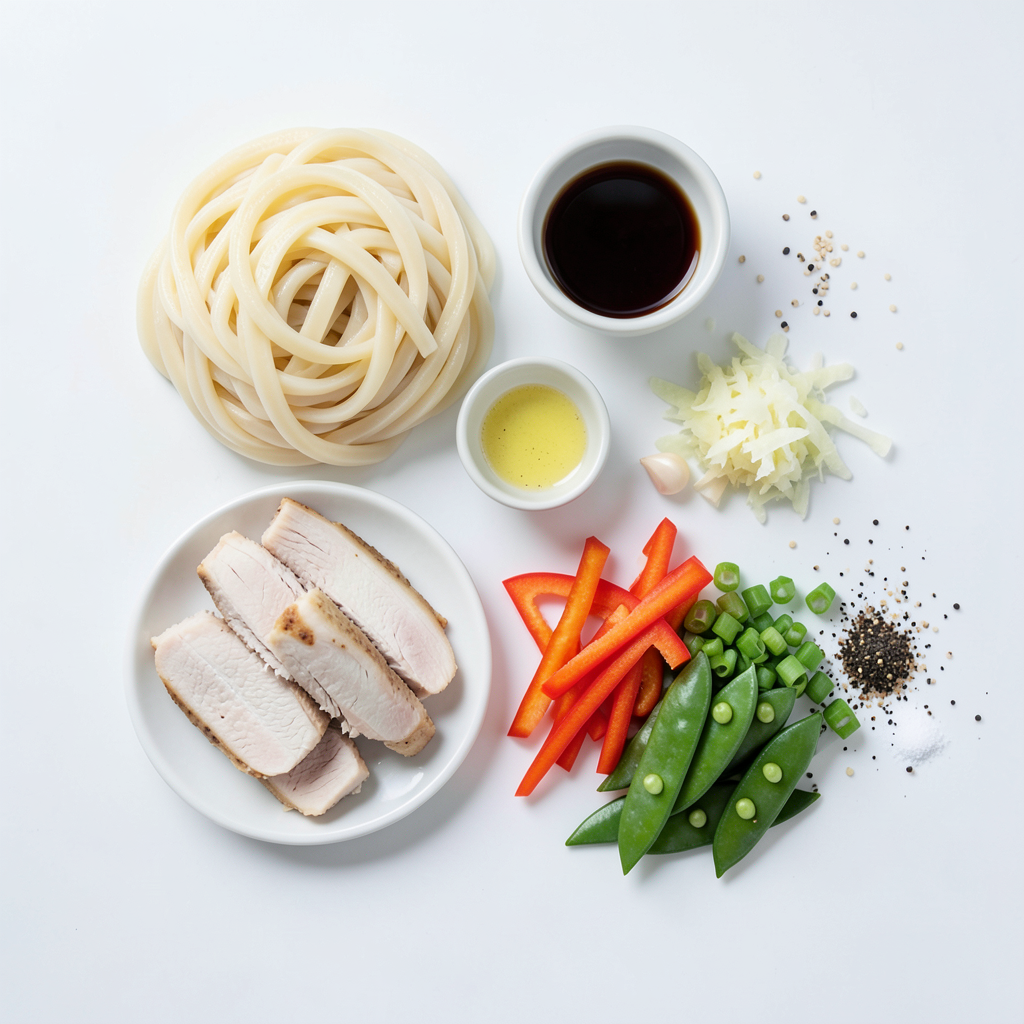
Gather these ingredients to make your sesame ginger chicken udon. Udon noodles give a nice chewy texture. Chicken breast adds protein and flavor. Sesame oil brings a nutty taste. Low sodium soy sauce keeps it healthy. Fresh ginger and garlic add a punch of flavor. Bell pepper and snap peas bring crunch and color. Green onions give a fresh finish, while sesame seeds add a bit of crunch. Salt and pepper are key for seasoning. You can use fresh cilantro as a bright garnish if you like.
Using fresh ingredients helps make this dish taste its best. It also makes the meal colorful and fun to eat. Prepare everything before cooking for a smooth cooking experience. Enjoy this hearty dish that warms you up!
Step-by-Step Instructions
Cooking Udon Noodles
To start, you need to cook the udon noodles. Boil water in a large pot. Follow the cooking time on the package. It usually takes about 8-10 minutes. Once they are soft, drain the noodles. Rinse them under cold water to stop the cooking. Set them aside for later.
Preparing the Chicken
Next, slice the chicken breasts into thin pieces. This helps them cook faster. Heat sesame oil in a large skillet or wok over medium-high heat. Add the chicken slices. Season with salt and pepper. Cook for about 5-7 minutes. You want the chicken to turn golden brown and be fully cooked.
Sautéing Aromatics and Vegetables
Once the chicken is cooked, it’s time for the fun part! Add grated ginger and minced garlic to the skillet. Stir and sauté for about a minute. This will make your kitchen smell amazing! Then, toss in the julienned bell pepper and snap peas. Cook for another 3-4 minutes. You want them to be tender but still crisp.
Combining Ingredients
Now, pour in the low-sodium soy sauce. Toss everything to coat the chicken and vegetables well. Then, add the cooked udon noodles to the skillet. Mix all the ingredients together until everything is heated through. Finally, sprinkle chopped green onions and sesame seeds on top. Give it a final stir. Taste and adjust the seasoning if needed. Serve hot and enjoy!
Tips & Tricks
Achieving Perfectly Cooked Udon
To get the best udon, start with fresh noodles. Cook them according to the package instructions. Do not overcook them; they should be firm but tender. Once cooked, drain them well. Rinse with cold water to stop the cooking. This helps keep them from sticking together.
Enhancing Flavor with Fresh Herbs
Fresh herbs can boost the taste of your dish. Try adding cilantro at the end for a fresh kick. You can also sprinkle some fresh mint for a unique twist. If you like a bit of heat, consider adding fresh chili or a pinch of chili flakes.
Adjusting Heat Levels
You control the heat in this dish. For a milder flavor, use less ginger and garlic. If you want more heat, add more ginger or garlic. You can also increase the amount of soy sauce for a bolder taste. Always taste as you go to find your perfect balance.
Variations
Adding Additional Vegetables
You can boost the nutrition by adding more veggies. Try carrots, broccoli, or zucchini. These will add color and crunch. Just slice them thinly so they cook fast. Toss them in with the bell pepper and snap peas. This makes your dish even more hearty and fun.
Protein Substitutes
If you want to change the protein, consider tofu or shrimp. Tofu is great for a vegetarian option. Use firm tofu and pan-fry it until golden. Shrimp cooks quickly and adds a sweet taste. Both options will still fit well with the sauce and noodles.
Sauce Alternatives
You can mix up the sauce, too. Try teriyaki or hoisin for a sweeter flavor. Coconut aminos is another way to make it soy-free. Each sauce gives a different twist to the dish. So, feel free to experiment and find your favorite!
Storage Info
Storing Leftovers
After you enjoy your Sesame Ginger Chicken Udon, store leftovers in an airtight container. Make sure they cool down to room temperature first. Place the container in the fridge. The dish stays fresh for up to three days. If you notice any odd smells or changes in texture, it’s best to toss it.
Reheating Instructions
To reheat, you can use the microwave or a skillet. If using a microwave, place your portion in a bowl and add a splash of water. Cover it with a microwave-safe lid. Heat for 1-2 minutes, stirring halfway through. If you prefer a skillet, heat over medium-low heat. Add a little sesame oil to the pan. Stir the noodles and chicken until warmed through. This keeps the flavors bright and tasty.
Freezing Tips
If you want to store Sesame Ginger Chicken Udon for longer, consider freezing it. Place cooled leftovers in a freezer-safe container. Make sure to remove as much air as possible to prevent freezer burn. Label the container with the date. You can freeze it for up to 2 months. When ready to eat, thaw it in the fridge overnight. Reheat using the methods mentioned above. Enjoy your hearty noodle dish even after some time!
FAQs
What can I serve with Sesame Ginger Chicken Udon?
You can serve this dish with a side of steamed broccoli or a light salad. Both add color and crunch to your meal. You might also enjoy this with some dumplings or spring rolls for a full spread.
Can I make this recipe ahead of time?
Yes, you can prepare the chicken and vegetables ahead of time. Just store them in the fridge. When you're ready to eat, cook the udon noodles and mix everything together. This saves time during busy days.
Is this recipe suitable for meal prep?
Absolutely! Sesame Ginger Chicken Udon is great for meal prep. You can divide it into containers for easy lunches or dinners. Just be sure to keep the noodles and sauce separate until you are ready to eat. This keeps everything fresh and tasty.
What other noodles can I use in this recipe?
You can use rice noodles or soba noodles if you prefer. Both options work well with the sauce and flavors. If you like a different texture, try egg noodles or even zucchini noodles for a low-carb option.
How can I make this dish gluten-free?
To make this dish gluten-free, use gluten-free udon noodles or rice noodles. Swap the soy sauce for tamari, which is gluten-free. These simple changes let you enjoy the same great flavors without the gluten.
This blog post covered how to make a tasty Sesame Ginger Chicken Udon. We explored ingredients like chicken, udon noodles, and fresh veggies. I shared step-by-step instructions on cooking and combining them. Tips included cooking noodles perfectly and trying different sauces. We also looked at variations for added flavor and how to store leftovers.
In the end, this dish is easy, quick, and fun to make. You can adjust it to fit your taste. Enjoy cooking and sharing this meal!