

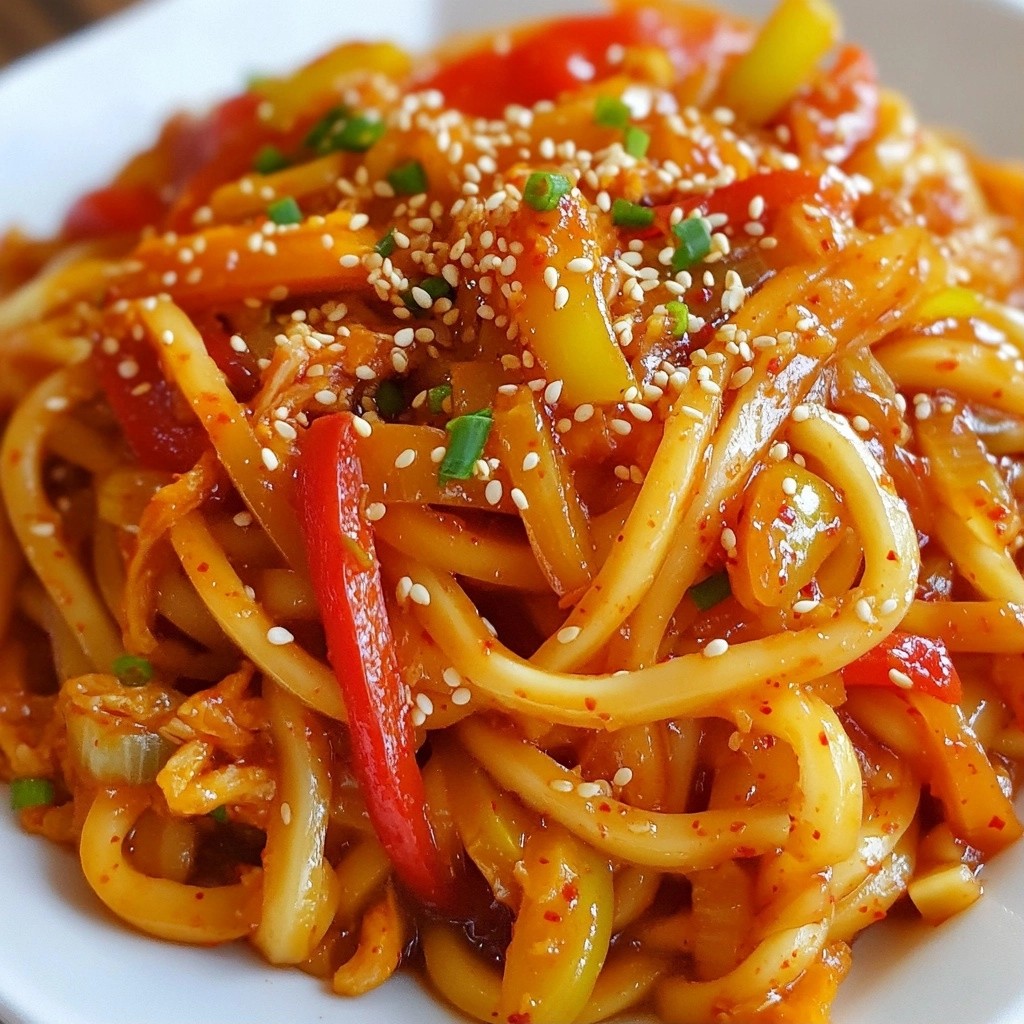
Looking for a warm, tasty dish that packs a punch? You've come to the right place! This Spicy Kimchi Udon recipe combines chewy udon noodles and zesty kimchi for a hearty meal. It’s perfect for any day when you crave something comforting yet exciting. I’ll show you how to whip up this satisfying dish with easy steps, handy tips, and flavorful variations. Let’s get cooking!
Ingredients
List of Ingredients
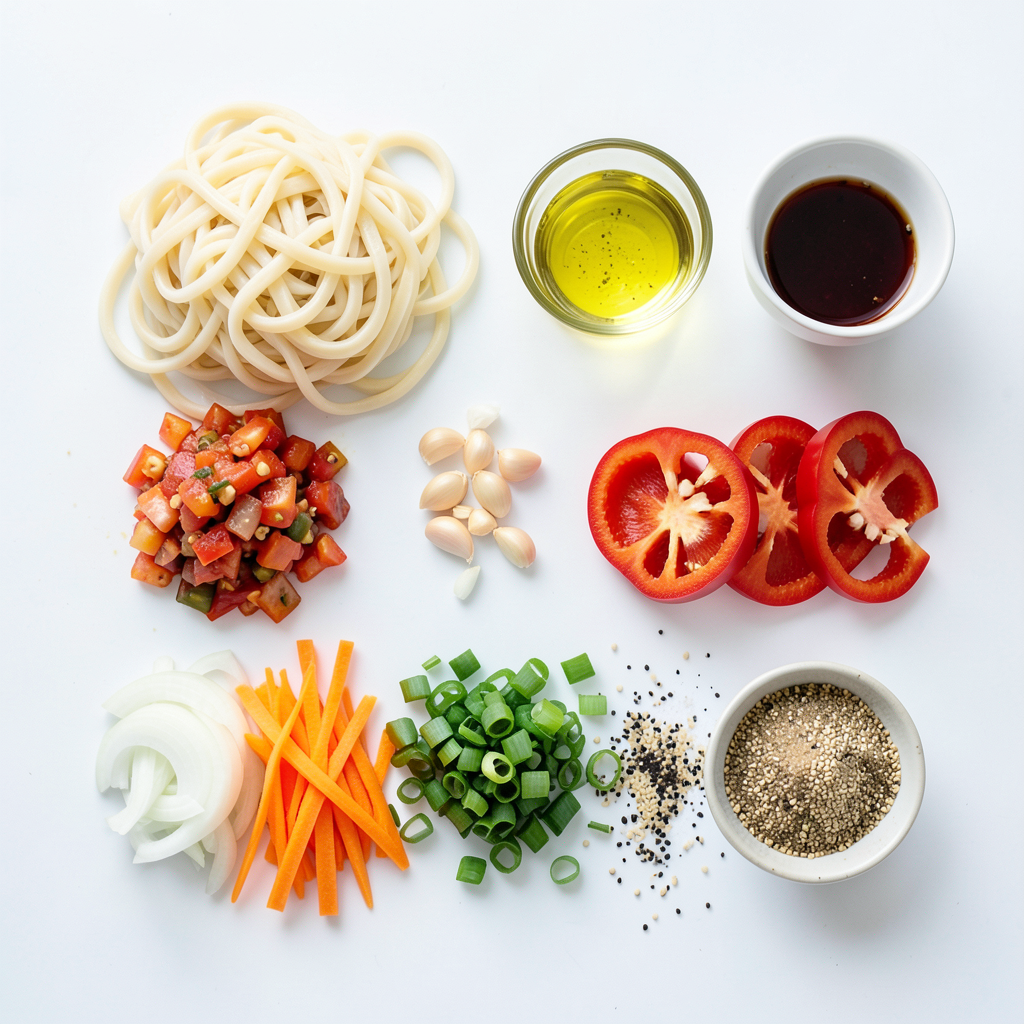
To make spicy kimchi udon, gather these ingredients:
- 200g udon noodles
- 1 cup kimchi, chopped
- 1 tablespoon sesame oil
- 1 tablespoon vegetable oil
- 2 garlic cloves, minced
- 1 small onion, sliced
- 1 red bell pepper, sliced
- 1 carrot, julienned
- 2 green onions, chopped
- 2 tablespoons soy sauce
- 1 tablespoon gochujang (Korean chili paste)
- 1 teaspoon sugar
- 1 tablespoon sesame seeds (for garnish)
- Salt and pepper to taste
Substitutions for Ingredients
You can swap out some ingredients to fit your taste or pantry:
- If you lack udon noodles, try ramen or soba noodles.
- Use any type of kimchi you like, such as napa or radish.
- For sesame oil, olive oil or canola oil works too.
- Swap out veggies based on what you have. Broccoli or zucchini can work well.
- If gochujang is hard to find, use Sriracha for heat.
Cooking Equipment Needed
To prepare this dish, you will need:
- A large pot for boiling noodles
- A large skillet or wok for stir-frying
- A knife and cutting board for chopping
- A spatula or wooden spoon for stirring
- Measuring spoons for accuracy
Step-by-Step Instructions
Cooking the Udon Noodles
To start, fill a large pot with water and bring it to a boil. Once the water is bubbling, add 200g of udon noodles. Cook them according to the package instructions. This usually takes about 6-8 minutes. When they are tender, drain the noodles and set them aside. Make sure they don’t stick together.
Stir-Frying the Vegetables
Next, heat a large skillet or wok over medium heat. Add 1 tablespoon of vegetable oil and 1 tablespoon of sesame oil. When the oil is hot, add 2 minced garlic cloves and 1 sliced small onion. Sauté for 2-3 minutes until they smell great. Then, toss in 1 sliced red bell pepper and 1 julienned carrot. Keep stirring for 3-4 minutes until the veggies soften slightly. Now, add 1 cup of chopped kimchi. Mix it well and cook for another 2 minutes. This helps all the flavors blend together.
Mixing the Sauce with Noodles
Now it's time to combine everything. Add the cooked udon noodles to the skillet with the veggies and kimchi. Pour in 2 tablespoons of soy sauce, 1 tablespoon of gochujang, and 1 teaspoon of sugar. Toss everything together gently. Make sure the noodles are well coated in the sauce. Taste your dish and add salt and pepper as needed. Just before serving, sprinkle in chopped green onions for a burst of freshness. Finally, plate your spicy kimchi udon and top it with 1 tablespoon of sesame seeds for that extra crunch. Enjoy your flavorful dish!
Tips & Tricks
How to Enhance Flavor
To make your spicy kimchi udon really pop, consider adding fresh herbs. Chopped cilantro or Thai basil gives a bright touch. You can also add a splash of rice vinegar for extra tang. If you like it spicy, add more gochujang or some chili flakes. For a hint of sweetness, toss in a bit more sugar.
Common Mistakes to Avoid
One common mistake is overcooking the udon noodles. Always cook them just until tender, then drain them right away. Another mistake is not mixing the sauce well. Make sure every noodle gets coated. If your dish ends up too salty, balance it with a little sugar or more vegetables.
Serving Suggestions
Serve your spicy kimchi udon in deep bowls. Top with sesame seeds and extra green onions for color. You can also add a fried egg on top for richness. Pair it with a side of pickled veggies for a crunchy contrast. Enjoy this dish hot for the best flavor experience!
Variations
Vegetarian Options
You can make this dish vegetarian by skipping meat. Instead, use more veggies. Tofu adds protein and texture. Add mushrooms for umami flavor. You can also try zucchini or broccoli. They give a nice crunch and color. This way, your spicy kimchi udon stays full of life.
Protein Add-Ins
If you want extra protein, add some cooked chicken, beef, or shrimp. These meats pair well with the spicy kimchi. Cook them in the skillet before adding the veggies. Or, try using tempeh or seitan for a plant-based option. Both options give a great texture and flavor.
Different Noodle Choices
You can switch udon for other noodles too. Soba noodles provide a nutty taste. Rice noodles are gluten-free and soak up flavors well. You can even use spaghetti in a pinch! Each noodle gives a unique twist to the dish. Experiment and find your favorite combination.
Storage Info
How to Store Leftovers
To keep your spicy kimchi udon fresh, place leftovers in an airtight container. Store them in the fridge for up to three days. This helps keep the noodles and veggies from getting soggy. If the kimchi is too spicy for you, it may become more intense in flavor over time.
Reheating Instructions
When you're ready to eat your leftovers, reheat them on the stove. Add a splash of water or oil to the pan to prevent sticking. Heat them over medium heat for about five to seven minutes. Stir often to make sure everything heats evenly. You can also use the microwave. Heat in short bursts, stirring in between. This keeps the noodles soft and delicious.
Freezing Guidelines
If you want to store your spicy kimchi udon for longer, freezing is a great option. First, let the noodles cool completely. Then, place them in a freezer-safe bag or container. Make sure to remove as much air as possible. You can freeze them for up to two months. When you're ready to enjoy them, thaw them in the fridge overnight. Reheat as noted above for the best taste.
FAQs
What is kimchi, and how is it made?
Kimchi is a Korean dish made from fermented vegetables. It often includes napa cabbage and radishes. To make kimchi, you first mix the veggies with salt. Let them sit to draw out water. Then, you add spices like garlic, ginger, and chili powder. The mix is packed into jars and left to ferment at room temperature. After a few days, it develops a tangy flavor. You can enjoy kimchi fresh or use it in many dishes, like our spicy kimchi udon.
Can I use other noodles instead of udon?
Yes, you can use other types of noodles. Soba or rice noodles work well in this dish. These noodles may change the taste and texture slightly. If you use thinner noodles, reduce the cooking time. Always cook the noodles according to the package instructions. This way, they will blend well with the kimchi and sauce.
How spicy is gochujang?
Gochujang is a Korean chili paste. It has a mild to medium heat level. The spice can vary by brand, so try a small amount first. It adds a deep flavor along with the heat. If you want less spice, use less gochujang. You can also mix it with a little sugar to balance the heat. Gochujang makes dishes like spicy kimchi udon taste great!
You learned about ingredients, cooking steps, and tips for making udon noodles. We covered substitutions, equipment, and ways to enhance flavor. You now have variations to suit your taste and storage tips to keep leftovers fresh. Remember, cooking is fun and allows for creativity. Try different noodles and ingredients to make this dish your own. Enjoy the process and share your delicious results with others!