

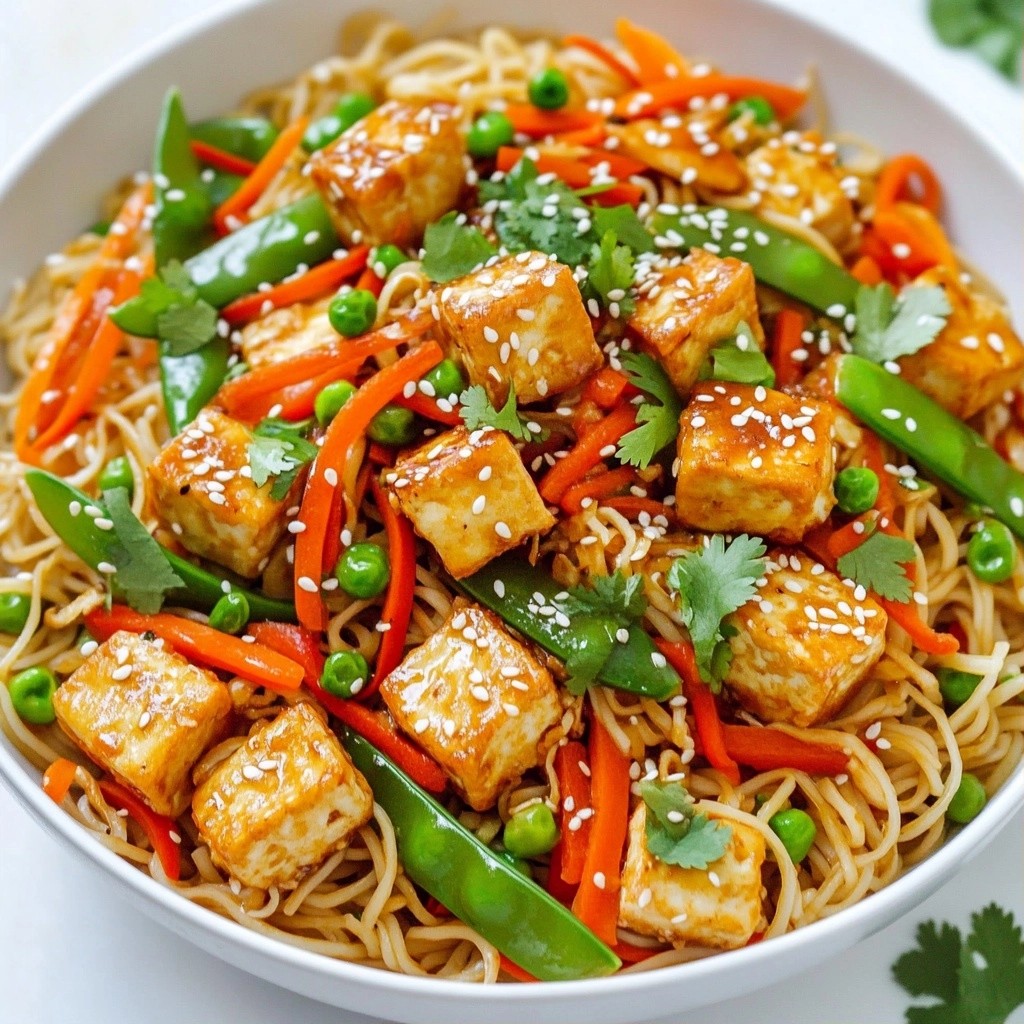
Looking for a quick, tasty, and healthy meal? Vegan Sesame Tofu Noodle dishes hit the spot! Packed with flavor and protein, they’re simple to make and sure to please everyone at the table. In this article, I’ll guide you through the essential steps to create these delightful dishes. Let’s dive into the ingredients, cooking methods, and some tasty tips that will turn your meal into a standout experience!
Ingredients
Essential Ingredients for Vegan Sesame Tofu Noodles
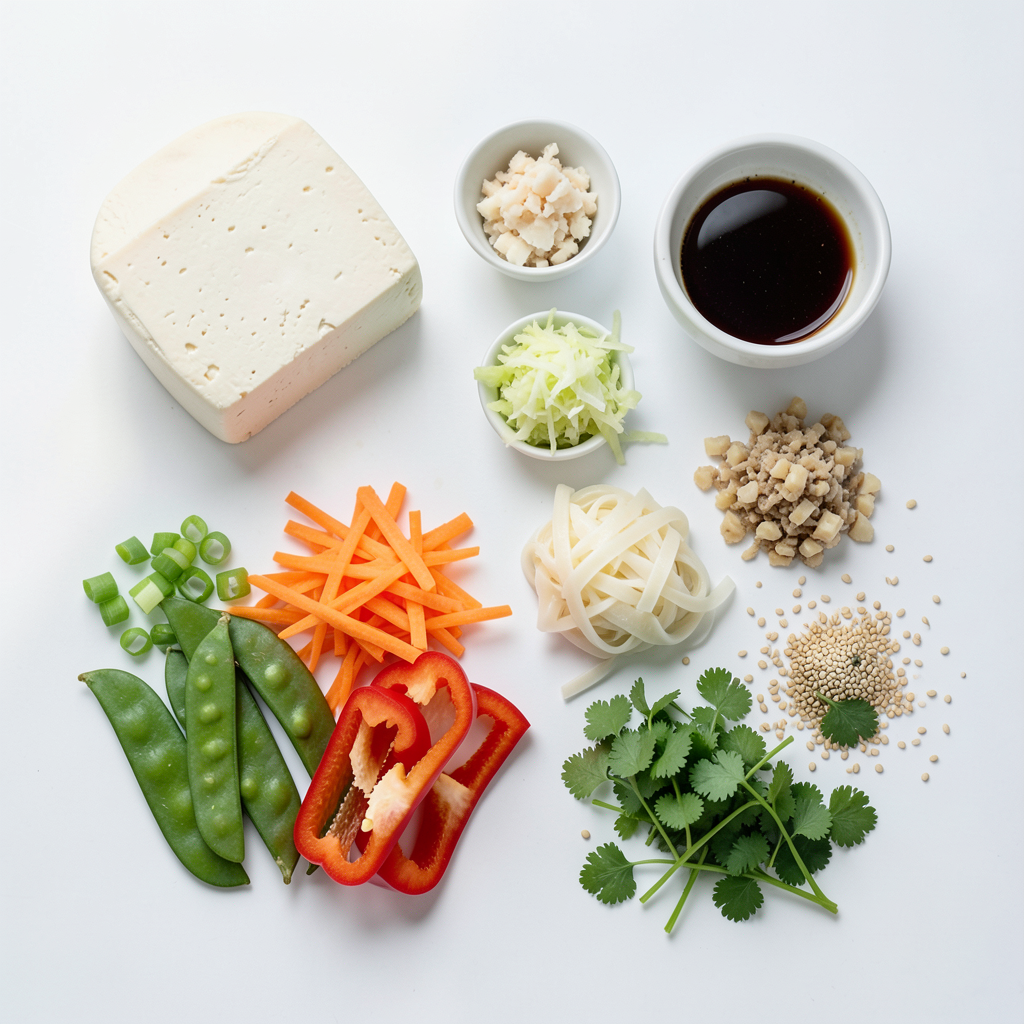
To make Vegan Sesame Tofu Noodles, you need these key ingredients:
- 1 block firm tofu, drained and pressed
- 200g rice noodles
- 2 tablespoons sesame oil
- 3 tablespoons soy sauce (or tamari for gluten-free)
- 2 tablespoons tahini
- 1 tablespoon maple syrup
- 2 garlic cloves, minced
- 1 teaspoon fresh ginger, grated
- 1 carrot, julienned
- 1 red bell pepper, sliced
- 1 cup snow peas
- 2 green onions, chopped
- Toasted sesame seeds, for garnish
- Fresh cilantro, for garnish
These ingredients come together to create a tasty and filling meal.
Optional Add-Ins to Enhance Flavor
You can add other ingredients to boost flavor and nutrition. Here are some suggestions:
- Broccoli florets for extra crunch
- Spinach or kale for a nutrient boost
- Chopped peanuts or cashews for added texture
- Hot sauce for some heat
- Lime juice for a zesty touch
Feel free to mix and match these add-ins based on your taste.
Nutritional Information Breakdown
This dish is not only delicious but also nutritious. Here's a quick look at the nutritional highlights:
- Protein: Tofu provides a great source of plant-based protein.
- Fiber: The vegetables and rice noodles add fiber, aiding digestion.
- Vitamins: Carrots and bell peppers are packed with vitamins A and C.
- Healthy fats: Sesame oil and tahini deliver healthy fats for heart health.
Each serving is well-balanced, making it a perfect meal option for everyone.
Step-by-Step Instructions
Preparing the Tofu
Tofu needs to be prepared well for this dish. Start by draining the tofu. Press it to remove extra water. Cut the tofu into small cubes. Use a non-stick pan; it helps the tofu cook better. Heat up one tablespoon of sesame oil in the pan over medium heat. Once the oil is hot, add the tofu cubes. Cook them until they are golden brown on all sides, which takes about 8-10 minutes. This gives the tofu a nice flavor and texture.
Cooking the Rice Noodles
While the tofu cooks, boil water in a pot. Once the water is boiling, add 200g of rice noodles. Follow the package instructions for cooking time. Usually, it takes about 5-7 minutes. Stir the noodles a bit to prevent sticking. When they are soft, drain them and set them aside.
Making the Sauce
Next, it is time to make the sauce. In a small bowl, combine soy sauce, tahini, maple syrup, minced garlic, and grated ginger. Whisk these ingredients together until smooth. This sauce adds a rich and tasty flavor to your dish.
Stir-Frying Vegetables and Combining Ingredients
Once the tofu is golden, add the julienned carrot, sliced red bell pepper, and snow peas to the pan. Stir-fry the vegetables for about 3-4 minutes. You want them to be tender but still crisp. After that, pour the sauce over the tofu and veggies. Add the cooked rice noodles next. Toss everything together evenly, so all the noodles and veggies get coated in the sauce. Cook for an extra 2 minutes to warm it all through. Finally, remove the pan from heat and stir in chopped green onions.
For a great presentation, serve the noodles in a big bowl. Drizzle some extra sesame oil on top. Garnish with toasted sesame seeds and fresh cilantro. Enjoy your tasty Vegan Sesame Tofu Noodles!
Tips & Tricks
How to Ensure Perfectly Crispy Tofu
To get crispy tofu, start by pressing it. This step removes excess water. Next, cut the tofu into small cubes. Heat 1 tablespoon of sesame oil in a pan over medium heat. Add the tofu cubes and let them cook without stirring for a few minutes. This helps form a golden crust. Flip the tofu gently to brown all sides, about 8-10 minutes.
Best Practices for Cooking Rice Noodles
When cooking rice noodles, always check the package instructions. Bring a pot of water to a boil first. Add the noodles and stir them gently. Cook until just tender, usually 4-6 minutes. Then, drain and rinse the noodles under cold water. This keeps them from sticking together and helps them stay fluffy.
Flavor Enhancements and Customization Suggestions
To make your dish even tastier, consider adding more veggies. Broccoli, bok choy, or mushrooms work well. You can also use different sauces. Try hoisin sauce or chili paste for a kick. If you love crunch, add chopped nuts or seeds as a topping. Fresh herbs like basil or mint can brighten the dish too. Adjust the sweetness by adding more maple syrup or tahini to suit your taste.
Variations
Alternative Proteins to Use
If you want to switch things up, try different proteins. Tempeh works great instead of tofu. It has a firm texture and absorbs flavors well. Seitan is another option; it has a chewy bite and is rich in protein. Chickpeas can also work; they add a nice creaminess and are full of fiber. You can even use lentils for a unique twist. Each option gives you a new taste and texture.
Vegetable Substitutes for Different Flavors
You can change the veggies to suit your taste. Broccoli florets add a nice crunch. Zucchini can bring a soft texture when slightly cooked. You might like bell peppers in many colors for a pop of color. Spinach is great too; it wilts down and adds nutrition. Mushrooms can offer an earthy taste that many enjoy. Be creative and mix different vegetables for a new experience.
Gluten-Free and Low-Carb Options
For a gluten-free meal, use tamari instead of soy sauce. You can also replace rice noodles with zucchini noodles or spaghetti squash. These options reduce carbs and keep the dish light. Shirataki noodles are another low-carb choice. They have a different texture but soak up flavors well. These alternatives keep your meal tasty and fit your diet needs.
Storage Info
How to Properly Store Leftover Vegan Sesame Tofu Noodles
Store your leftover vegan sesame tofu noodles in an airtight container. Let them cool down first. This helps keep the noodles fresh and tasty. They will last for about 3 to 5 days in the fridge. Remember to keep the sauce separate if possible. This helps maintain the noodle's texture.
Tips for Reheating Without Losing Texture
When reheating, use a pan instead of a microwave. This method keeps the noodles from getting mushy. Add a splash of water or extra sesame oil to keep them moist. Heat over low to medium heat, stirring gently. This way, the tofu stays crispy and the veggies stay bright.
Freezing and Thawing Instructions
You can freeze these noodles, but it’s best to separate the tofu and veggies. Place them in freezer-safe bags or containers. They can last up to 2 months in the freezer. When ready to eat, thaw them in the fridge overnight. Reheat as mentioned to keep their yummy texture.
FAQs
Can I use a different type of tofu?
Yes, you can. You may use soft or silken tofu. Soft tofu will give a creamier texture. It may break apart easier, so be gentle when cooking. For a firmer bite, stick with the firm tofu.
Is this recipe suitable for meal prep?
Absolutely! This dish works well for meal prep. You can store it in the fridge for about three days. Just keep the sauce separate if you want the noodles to stay fresh. Reheat before serving.
What sauces can I substitute for soy sauce?
You can try tamari for a gluten-free option. Coconut aminos is another great choice. It adds a hint of sweetness and is lower in sodium. You could also use a mix of vinegar and water for a lighter flavor.
How can I make this dish spicier?
Add some chili flakes or sriracha to the sauce. You can also toss in some sliced jalapeños while cooking. For a kick, try adding a dash of hot sesame oil. Taste as you go to find your perfect heat level.
This blog covered the essentials for vegan sesame tofu noodles, from ingredients to storage. We explored how to prepare crispy tofu and cook rice noodles just right. Adding fun flavors and mix-ins can make your dish special. Remember, you can adjust ingredients to fit your taste or dietary needs. With these tips and tricks, you can enjoy tasty, healthy meals anytime. Make this dish your own, and share it with friends for a delightful experience.